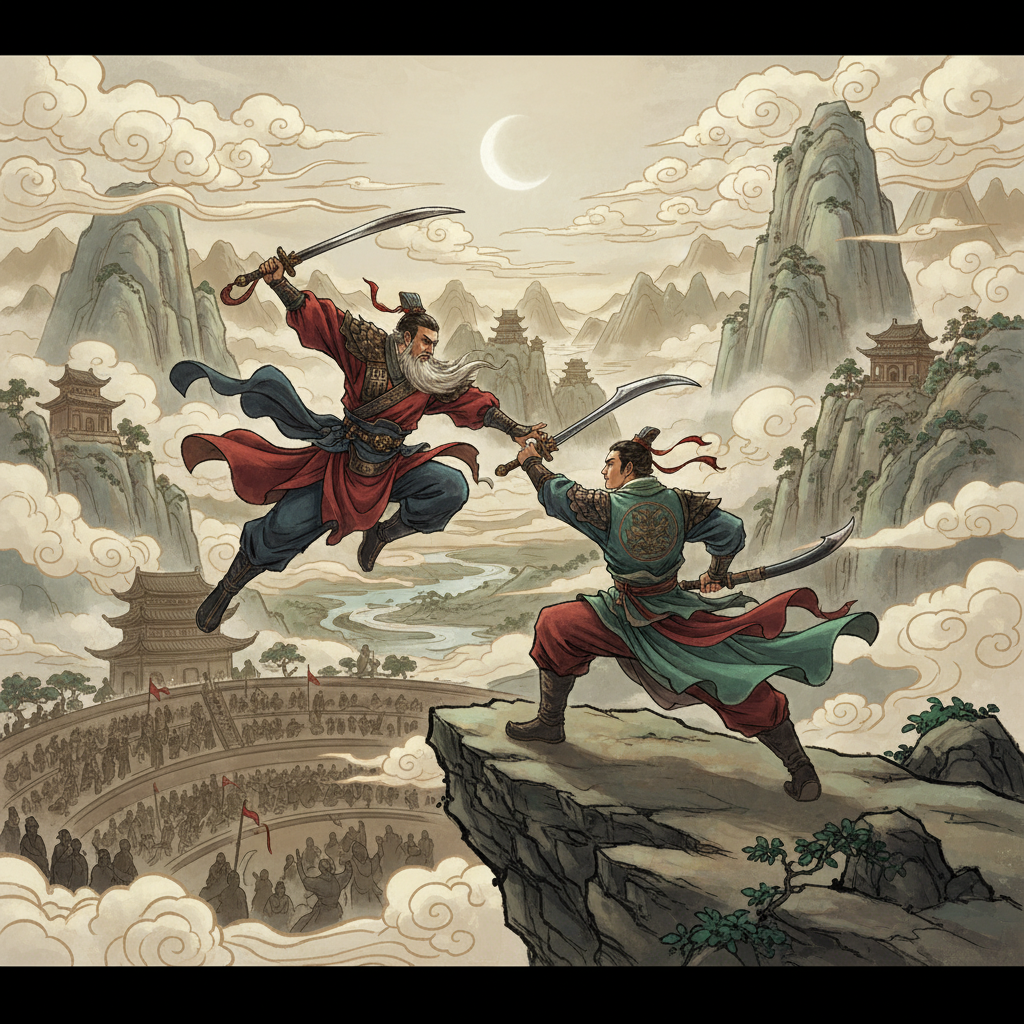
The Role of Duels in Jin Yong's Wuxia World
Jin Yong, one of the most revered authors in Chinese literature, crafted an expansive universe of martial arts, honor, and intricate relationships in his wuxia novels. Central to these stories is the concept of the duel, a critical element that not only serves as a mechanism for conflict resolution but also functions as a lens through which characters reveal their values, principles, and martial prowess. In this article, we will delve into the fascinating world of duels within Jin Yong’s writings, exploring their historical context, cultural significance, and how they shape character and story arcs.
Historical Context: The Evolution of Wuxia
Wuxia, a genre of Chinese literature focusing on the exploits of martial artists and the chivalrous spirit of the era, has roots dating back centuries. Emerging during the Tang (618–907 AD) and Song (960–1279 AD) dynasties, the genre flourished in the form of folk tales and poetry, which laid the groundwork for the full-fledged narrative structures developed later. Jin Yong (Louis Cha), writing in the mid-20th century, reinvigorated this rich tradition, embedding it within modern societal issues and evolving cultural ethos.
Duels, notable in historical Chinese folklore, became a dramatic focal point in Jin Yong's novels. They encapsulate themes of honor, justice, and personal vendettas, reflecting both individual and societal values. This historical grounding lends authenticity to the challenges faced by his characters, allowing readers to appreciate the skill and artistry involved in martial combat.
Character Development Through Duels
The duels in Jin Yong's novels are not mere spectacles of violence; they serve as pivotal moments for character development. Each duel often highlights the protagonist's internal struggles, moral dilemmas, and growth—both as a warrior and a person. For instance, in "The Legend of the Condor Heroes," Guo Jing's battles encapsulate his journey from a naive hero to a capable martial artist steeped in the virtues of loyalty and righteousness. Each opponent he faces not only tests his physical skills but also challenges his understanding of honor and duty.
Conversely, antagonists like Ouyang Feng in "The Return of the Condor Heroes" reveal themselves through their dueling styles and motivations. A master of deception, Ouyang Feng's confrontations often expose a tragic backstory, showcasing the complexity within the realm of good versus evil. Jin Yong’s duels, therefore, become dynamic arenas where character depth is revealed, and moral gray areas are explored.
The Martial Arts Philosophy: Techniques and Styles
Martial arts in Jin Yong's novels are not simply a collection of fighting techniques but reflect deeper philosophical principles. Each school of martial arts embodies a unique style—whether it be the swift and fierce techniques of the "Iron Palm" or the intricate footwork of the "Misty Steps." Jin Yong meticulously describes these techniques, often as part of a detailed curriculum derived from historical practices and legendary figures.
Moreover, the duels often incorporate elements drawn from Taoist and Confucian ideals, illustrating the principles of harmony and balance. For example, a protagonist may employ the finesse of Tai Chi, emphasizing fluidity over brute strength. This philosophical underpinning not only heightens the narrative tension but also portrays martial arts as a means of self-cultivation and a pursuit of personal virtue.
Cultural Significance: Duels as Metaphor
In a broader cultural context, duels in Jin Yong’s works symbolize the struggle between tradition and modernity—a recurring theme in post-Han China. The conflicts often reflect tensions within oneself and society at large, making them universally relatable. They encapsulate personal battles as much as physical confrontations, embodying the clashing ideologies of justice, revenge, and loyalty.
Moreover, these duels highlight the importance of honor and respect within martial arts, qualities reflecting traditional Chinese values. In many instances, duels are framed not merely as contests of strength but as battles of ideologies, where the victor emerges as a moral exemplar, further entrenching the cultural ideals present in Jin Yong's narrative.
Conclusion: The Enduring Legacy of Jin Yong’s Duels
The art of dueling in Jin Yong’s wuxia novels is far-reaching. It has the power to entertain, educate, and provoke thought. Through his craft, Jin Yong has transcended mere storytelling, embedding philosophical inquiries within vigorous narratives that resonate across generations. The duels are not only action-packed encounters; they serve as critical milestones in the characters’ journeys, revealing their true selves in moments of intense pressure.
As readers and cultural enthusiasts continue to engage with Jin Yong's works, they find within each duel a reflection of deeper moral and cultural questions—a reminder that in the world of wuxia, every battle is as much about the heart and spirit as it is about skill and strength.