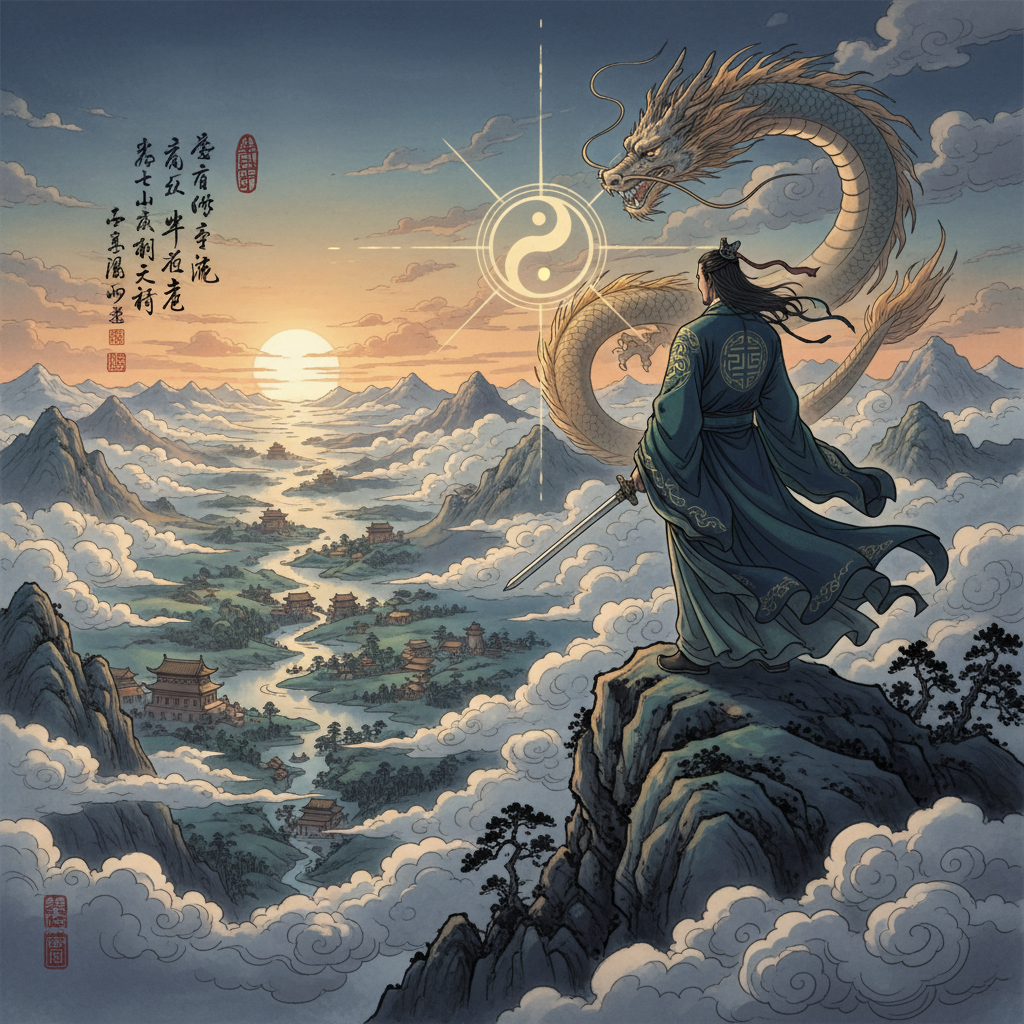
The Cultural Landscape of Wuxia Literature
Wuxia, a genre deeply embedded in Chinese culture, refers to stories of martial heroes who wander in a world of fantasy and adventure. At the heart of this genre lies the iconic works of Jin Yong, also known as Louis Cha, whose novels have shaped the modern perception of wuxia for decades. His profound storytelling combines martial arts, chivalry, loyalty, and intricate philosophical themes, making his work a rich tapestry of lore and wisdom.
Jin Yong wrote during the mid-20th century, a time of significant social upheaval in China. His stories reflect the struggles and aspirations of the Chinese people while incorporating traditional values and thought. They serve not only as entertainment but as a means to explore cultural identity, ethics, and the nature of heroism.
Character Archetypes: Heroes, Villains, and the Grey Areas
One defining feature of Jin Yong's novels is his array of complex characters, each embodying philosophical themes and moral dilemmas. Figures such as Guo Jing from "The Legend of the Condor Heroes" and Xiaolongnü from "The Return of the Condor Heroes" navigate a world filled with conflicting loyalties and ethical challenges.
These characters illustrate the Confucian and Daoist ideals prevalent in Chinese culture. For instance, Guo Jing epitomizes loyalty and righteousness, while his romantic interest, Huang Rong, embodies wisdom and adaptability. On the other hand, characters like Yang Guo display a more nuanced view of morality, often operating in the grey areas of right and wrong. Jin Yong's ability to craft characters that reflect authentic human experiences allows readers to engage with the philosophical questions that arise from each storyline.
Martial Arts as a Vehicle for Philosophical Exploration
Martial arts in Jin Yong's works serve more than just as physical confrontations; they represent a journey of self-discovery and moral growth. Each martial art style depicted in his novels often draws from real historical practices, integrating philosophical concepts. The use of "nei gong" (internal strength) versus "wai gong" (external strength) captures the yin-yang dynamics in Daoist philosophy, illustrating the importance of inner wisdom alongside physical prowess.
For instance, in "The Smiling, Proud Wanderer," the protagonist Linghu Chong learns that mastery is not solely about skill but involves understanding the deeper principles behind martial techniques. Through this, Jin Yong emphasizes that true martial arts transcend mere fighting skills; they are about developing one's character and achieving personal harmony—core tenets of Chinese philosophy.
Themes of Love, Loyalty, and Identity
In addition to martial prowess, themes of love, loyalty, and identity run deep in Jin Yong's narratives. His characters are frequently faced with choices that test their moral compass, illustrating the Confucian values of familial loyalty and honor.
In "The Deer and the Cauldron," the protagonist, Wei Xiaobao, represents a paradox of ideas, navigating a complex landscape of personal ambition, romance, and social morality. Wei's relationships complicate traditional notions of virtue, as he often acts out of self-interest, contrasting starkly with traditional heroic representations.
Jin Yong's novels encourage readers to reflect on their definitions of loyalty and identity and expose the conflict between societal expectations and personal desires. Each journey is a metaphor for the quest for self-understanding amidst external pressures—a common struggle in both historical and contemporary societies.
Wu and Wei: A Philosophy of Balance and Harmony
Jin Yong's work is steeped in the concepts of "wu" (martial) and "wei" (civil), reflecting an age-old philosophical dichotomy inherent in Chinese culture. The protagonists are often depicted as individuals seeking to balance these two aspects of life. Characters such as Zhang Wuji from "Heaven Sword and Dragon Saber" embody this quest, often having to reconcile their martial aspirations with moral obligations.
This duality is not merely a narrative device but serves as a reflection of real societal tensions. The struggle for balance between martial might and moral righteousness resonates with readers as it invokes a universal philosophical question: how does one pursue power while maintaining integrity?
Conclusion: Jin Yong's Enduring Legacy in Philosophy and Culture
Jin Yong’s wuxia novels are more than just tales of adventure and martial arts; they embody rich narratives infused with philosophical depth. His characters grapple with complex moral dilemmas, pushing readers to engage with profound questions about identity, loyalty, and the essence of heroism.
As a cultural touchstone, these stories continue to resonate across generations, leaving a lasting impact on not only Chinese literature but also global perspectives on the martial arts genre. Understanding Jin Yong’s work invites readers to explore the deeper currents of philosophy and ethics that shape human experience, solidifying his legacy as one of the most significant figures in modern literature.