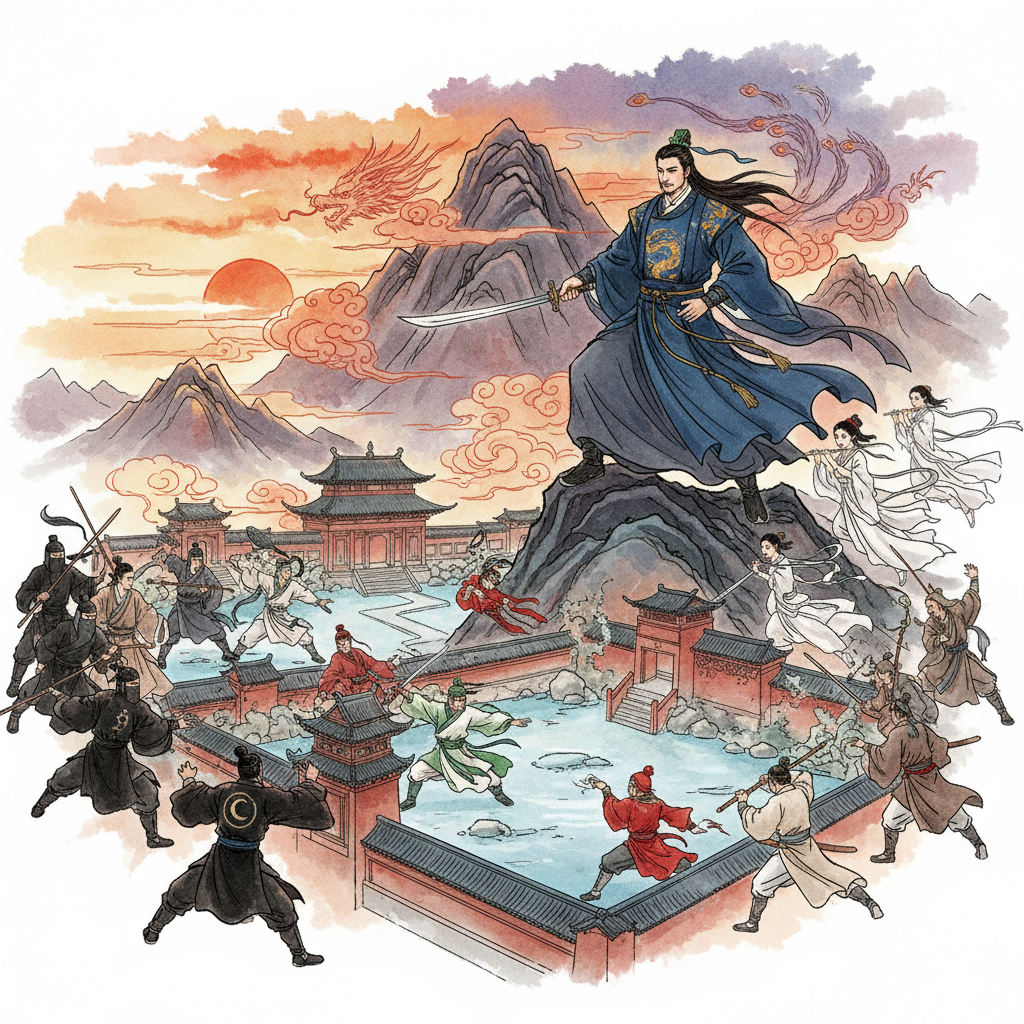
The World of Jin Yong's Wuxia Novels: A Cultural Tapestry
Jin Yong, the pen name of Louis Cha, has left an indelible mark on Chinese literature through his wuxia novels, which brilliantly weave together martial arts, romance, and philosophical contemplation. Central to these tales are the various sects—esteemed clans or schools of martial arts—that enrich the narratives and provide a backdrop for character development and conflict. Understanding these sects not only enhances the reader's experience but also opens a window into the cultural and historical significance inherent in Jin Yong's work.
The Martial Arts Sects: Pillars of the Wuxia Universe
In Jin Yong's novels, sects are more than just groups of martial artists; they represent various philosophies, moral codes, and social dynamics. Prominent among these are:
-
The Beggar's Sect (Hangzhou) – Often seen as a brotherhood of the downtrodden, they practice a unique form of martial arts characterized by their street-smart pragmatism. The Beggar's Sect serves as a crucial commentary on social hierarchy and justice, echoing the struggles of the common man in historical China.
-
Shaolin Temple – Arguably the most famous martial arts sect, Shaolin embodies discipline, spirituality, and the quest for inner peace. Its portrayal in Jin Yong’s narratives often tackles themes of redemption and the conflict between good and evil.
-
The Quanzhen Sect – Representing Taoist philosophies, this sect prioritizes balance and harmony, delving into notions of nature and the cosmos. Their approach to martial arts often intertwines with meditation and self-cultivation.
These sects serve not only as foundation stones for the characters’ evolution but also reflect the societal norms and values of varying historical periods in China.
Historical Context: The Backdrop of Jin Yong’s Sects
Understanding the historical context of the martial arts sects within Jin Yong's novels adds depth to their significance. The Ming and Qing Dynasties, marked by social upheaval and power struggles, provide a rich backdrop for the narratives. Many of the sects are inspired by historical counterparts, reflecting the real-life struggles faced by people during these eras.
Moreover, the literary tradition of wuxia, which began in the 12th century, gradually evolved, leading to the modern interpretations seen in Jin Yong's works. These narratives often mirror the conflicts of loyalty, honor, and treachery found within the historical chapters of China, resonating deeply with the reader’s understanding of both literature and culture.
Character Arcs Defined by Sect Affiliations
The allegiances of characters to specific martial arts sects often shape their arcs and moral compasses throughout the story. For instance:
-
Yang Guo from "The Return of the Condor Heroes" faces internal conflict shaped by his outsider status from both the Beggar’s Sect and the ancient sect of the 'Seven Heroes’. His growth emphasizes loyalty versus individuality, illustrating the struggle against societal expectations.
-
Zhang Wuji from "Heaven Sword and Dragon Sabre" operates in a world where sect loyalty can lead to betrayal. His journey through different sects, including his ties to the Ming Cult, exemplifies the tensions between unity and fidelity.
These character dynamics not only make the plots richer but also invite readers to question the nature of belonging and identity in their own lives.
The Philosophical Undertones of Sekpai Ming (Martial Arts Philosophies)
A deeper examination of Jin Yong's sects unveils philosophical undercurrents that explore fundamental human experiences. Many sects espouse values that parallel Confucian teachings, such as the importance of honor, family, and social responsibility. Conversely, the portrayal of villains often reflects a nihilistic view, showcasing how power can corrupt moral integrity.
The martial arts techniques themselves—often depicted through intricate choreography and imaginative abilities—serve as metaphors for the struggle between inner peace and external chaos. This melding of action and philosophy elevates Jin Yong's stories to a realm where readers are prompted to reflect on their own beliefs and practices regarding conflict and virtue.
Cultural Legacy: The Lasting Impact of Jin Yong's Sects
The legacy of Jin Yong's sects continues to resonate in modern Chinese popular culture, influencing films, television adaptations, and even video games. The archetypes established within these sects create a familiar landscape for audiences, making Jin Yong’s work an enduring reference point within the genre.
Moreover, the sects enhance intercultural discussions, as they illuminate the integration of martial arts within everyday life and the philosophical implications tied to self-defense and honor. As more readers and viewers explore these narratives, Jin Yong’s influence becomes a conduit for understanding the harmony and discord that characterize human experience.
In conclusion, the sects within Jin Yong's wuxia novels are vital not just as elements of action, but as complex, multifaceted entities that contribute both to character development and thematic depth. They encapsulate the struggle for identity and honor in a tumultuous world, underscoring why Jin Yong's work remains influential and celebrated today.