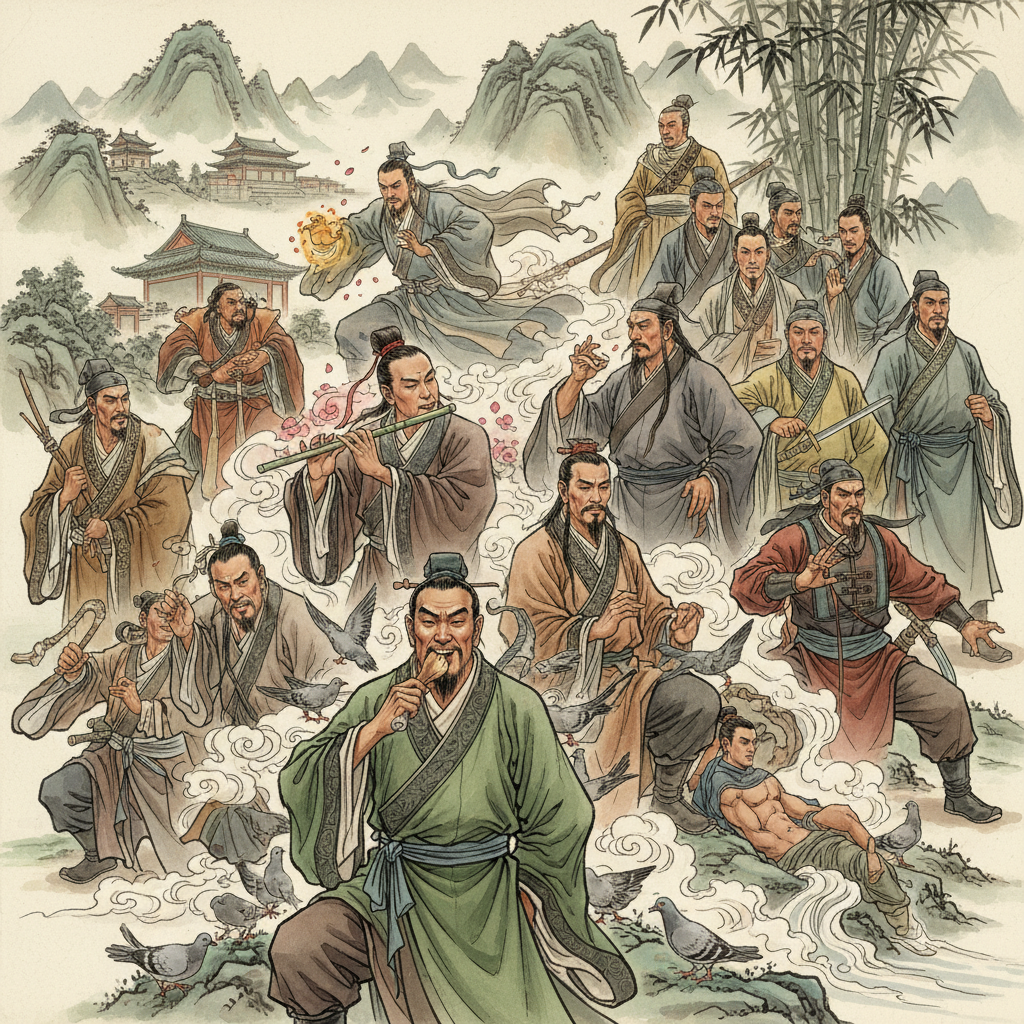
Introduction to Jin Yong's Wuxia Universe
Jin Yong, the pen name of Louis Cha, is a literary titan whose works have defined the wuxia genre—a fusion of martial arts, adventure, and intricate personal relationships set against the backdrop of ancient China. While the protagonists of his novels often garner the most attention for their extraordinary martial arts skills and moral dilemmas, the side characters in his stories offer a wealth of cultural and narrative significance. This article aims to explore these unsung heroes, examining how they contribute to the rich tapestry of Jin Yong's storytelling.
The Importance of Side Characters in Wuxia Narratives
In Jin Yong's novels, side characters serve a multifaceted role. They are not merely supporting players; they enrich the narrative and often embody specific virtues or vices that accentuate the central theme. Characters such as the valiant but tragic Yang Guo's sidekick, the charming but ultimately flawed "Demon Girl" Xiaolongnü, provide essential plot advancements and emotional depth.
Historically, the presence of side characters in Chinese literature often reflects Confucian values such as loyalty, justice, and integrity. These secondary figures frequently embody societal beliefs, struggle with ethical dilemmas, or act as foils to the main heroes. In doing so, they not only enhance the protagonists' arcs but also offer readers a deeper understanding of the intricate social dynamics in Jin Yong's world.
Noteworthy Side Characters and Their Contributions
1. Qiu Qianren: The Reluctant Anti-Hero
In "The Return of the Condor Heroes," Qiu Qianren stands out as an intriguing side character whose internal conflicts spotlight essential themes of redemption and identity. Once a villain, Qiu's transformation illustrates the capacity for change and forgiveness. His relationship with Yang Guo adds layers to the protagonist's journey, posing questions about loyalty and betrayal.
2. Hong Qigong: The Unconventional Mentor
A charming and unconventional figure, Hong Qigong from "The Legend of the Condor Heroes" serves not only as a mentor to Guo Jing but also as a comedic relief in serious moments. His eccentric personality, wisdom, and martial expertise make him a memorable presence. Moreover, Hong Qigong embodies the Daoist ideal of living in harmony with the world, highlighting the philosophical underpinnings often found in Jin Yong's works.
3. Mei Chaofeng: The Tragic Villainess
Mei Chaofeng’s character in "The Legend of the Condor Heroes" represents the complexities of human emotion and morality. As an antagonist fueled by love and vengeance, her tragic backstory evokes sympathy, illuminating the gray areas often explored in wuxia narratives. Mei's martial arts prowess and eventual downfall serve as a reminder of the ambitions that can lead people astray, a recurring theme in Jin Yong's works.
Cultural Significance of Side Characters
The side characters in Jin Yong's novels often reflect the historical and social context of the times they portray. Wuxia stories, set in ancient China, grapple with concepts of honor, familial loyalty, and personal sacrifice. Characters like Huang Rong from "The Legend of the Condor Heroes" challenge traditional gender roles, showcasing empowerment and intelligence in a male-dominated society.
Moreover, these sidekicks provide a conduit for cultural identity, exploring themes of nationalism and regionalism. They often represent various martial arts schools or clans, embodying the diverse cultural aspects of different Chinese regions. Such representation not only enriches the plot but also serves to celebrate the complexity and unity within Chinese culture.
The Martial Arts Element: Techniques and Styles
The martial arts depicted in Jin Yong's novels are as diverse as the characters themselves. Side characters often introduce unique combat techniques that complement those of the protagonists, showcasing the broad spectrum of martial arts philosophy. For example, the character of Ouyang Feng, with his unorthodox style and cunning strategies, contrasts with Guo Jing’s straightforward approach, thereby enriching the readers' understanding of martial arts as not just physical prowess but also a mental discipline.
These fighting techniques often draw from historical martial arts traditions. Through his side characters, Jin Yong introduces readers to various schools of thought in martial arts, emphasizing not only brute strength but also the importance of strategy, ethics, and personal growth.
Conclusion: The Lasting Legacy of Side Characters in Jin Yong’s Wuxia
Jin Yong's side characters breathe life into his narratives, offering essential insights into the moral, philosophical, and cultural dimensions of his wuxia world. While the protagonists may wield the swords of honor and justice, it is the intricate web of relationships, conflicts, and growth represented by side characters that fully encapsulate the ethos of these tales. By examining these unsung heroes, we gain a deeper appreciation for Jin Yong's literary genius and the rich tapestry of human experience woven throughout his novels. As we continue to explore the lives and virtues of these side characters, we uncover the universal truths that resonate with readers across generations.