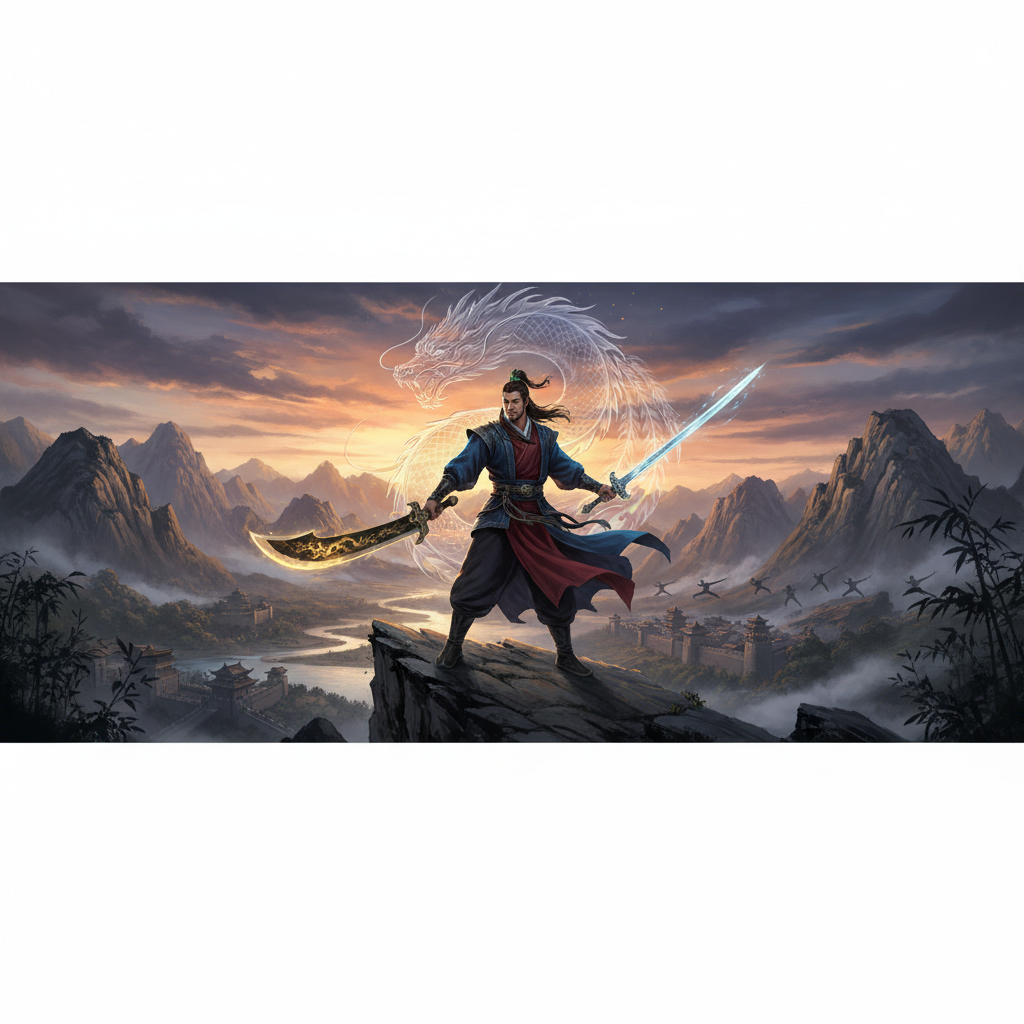
Introduction: The Cultural Legacy of Jin Yong’s Wuxia Weapons
Jin Yong (Louis Cha) remains one of the most influential figures in Chinese literary history, renowned for his wuxia novels that blend history, philosophy, martial arts, and adventure. Central to many of his stories are legendary weapons—swords, sabers, and other armaments—that do far more than serve as mere tools of combat. These weapons are often imbued with symbolic meaning, reflect the values and skill of their wielders, and contribute significantly to the layered narratives within Jin Yong’s works.
Set against the backdrop of various historical periods ranging from the Song to Qing dynasties, his novels portray a mythical version of the jianghu (martial artists’ community), where weapons not only define status but also represent intricate martial arts techniques passed down through generations. This article explores the role of iconic weapons in Jin Yong’s novels, their connection to martial arts traditions, and their broader cultural significance.
Historical Influences and the Evolution of Wuxia Weaponry
Jin Yong wrote during the mid-20th century, but his works are deeply rooted in Chinese history and folklore. The weapons featured often mirror those used in historical China but are frequently elevated with fantastical elements—secret materials, unique forging methods, or mystical powers—that emphasize the martial world’s heightened reality.
The swords and sabers in his novels typically originate from periods like the Song, Yuan, Ming, or Qing dynasties. For example, the heavy broadsword was a characteristic weapon for rebellious heroes during times of political turmoil. Jin Yong’s stories often reflect these historical tensions, where weapons play a pivotal role not just in duels but also in resistance against corrupt rulers or foreign invaders. Through these portrayals, readers gain insight into how martial prowess and weapon mastery encapsulate loyalty, honor, and cultural identity.
Iconic Weapons and Their Storylines
Several legendary arms in Jin Yong’s novels stand out for their craftsmanship, heritage, and narrative importance:
-
The Dugu Nine Swords (Dugu Jiujian): Featured in The Smiling, Proud Wanderer (Xiao Ao Jiang Hu), the Dugu Nine Swords technique complements a nearly invincible sword style designed to counter any form of attack. The sword function in this context symbolizes both martial superiority and philosophical insight into adaptation and fluidity in combat.
-
The Precious Sword of the Dragon-slaying Hero: In The Legend of the Condor Heroes (She Diao Ying Xiong Zhuan), the sword serves as a symbol of justice and national pride, wielded by protagonists who fight against foreign invasion and uphold traditional values.
-
The Heaven Reliant Sword and Dragon Slaying Saber: Central to The Heaven Sword and Dragon Saber (Heaven Sword Dragon Saber), these weapons carry hidden secrets crucial to the power struggle between martial sects and the Ming dynasty’s restoration efforts. They are emblematic of authority and the burdens of leadership.
Common across these examples is the fusion of weaponry with martial arts philosophy—masters do not merely strike but embody ethical codes and the spiritual essence of their weapon.
Martial Arts Techniques and Weapon Mastery
Jin Yong’s novels dedicate considerable attention to how characters harness weapons through refined martial arts skills. Rather than relying on brute strength, weapon use in wuxia requires balance, precision, and often, secret techniques passed down from elusive masters.
Weapon-related styles such as the Dugu Nine Swords are more than combat systems; they represent ultimate skill refinement that demands years of cultivation. Characters who master such weapons often embody perseverance, humility, and the philosophical ideal of wu wei (effortless action). Likewise, swordplay is often contrasted with saber techniques, with the former symbolizing grace and subtlety, while the latter emphasizes power and decisiveness.
This nuanced approach enhances the stories’ depth, highlighting martial arts as not only physical contests but as spiritual journeys.
Cultural Significance and Symbolism of Weapons
Beyond action scenes, Jin Yong’s swords and sabers carry symbolic weight. They often reflect the wielder’s character and the broader socio-political environment:
- Integrity and Honor: Weapons like the precious swords carry a sense of moral responsibility. A hero’s worth is inextricably linked to their respect for their weapon and what it stands for.
- Secret Knowledge and Legacy: Weapons frequently hide mysteries or martial secrets, becoming a metaphor for secret knowledge or lost traditions endangered by time and political upheaval, reinforcing themes of loyalty to heritage.
- Conflict and Duality: The interplay between the Heaven Reliant Sword and Dragon Slaying Saber encapsulates duality—power and restraint, destructive versus constructive forces, faithfulness and betrayal. This duality reflects the complexity of human nature and political realities in Chinese history.
Through these layers, Jin Yong’s novels transcend simple adventure tales and become rich cultural texts commenting on identity, perseverance, and moral philosophy.
Conclusion: Enduring Appeal of Jin Yong’s Wuxia Weapons
Jin Yong’s treatment of weapons in his wuxia universe exemplifies the deep interconnection between material culture, martial prowess, and spiritual values in Chinese tradition. His iconic blades are not just tools of war but carriers of storytelling, ethics, and history—inviting readers into a martial world where the sword is an extension of the soul.
For readers and martial arts enthusiasts alike, understanding these legendary weapons enriches the appreciation of Jin Yong’s novels, revealing why these stories continue to resonate across generations and cultures worldwide.
In exploring these weapons, one unearths the heart of wuxia itself: a timeless quest for justice, honor, and self-mastery through the art of the sword.