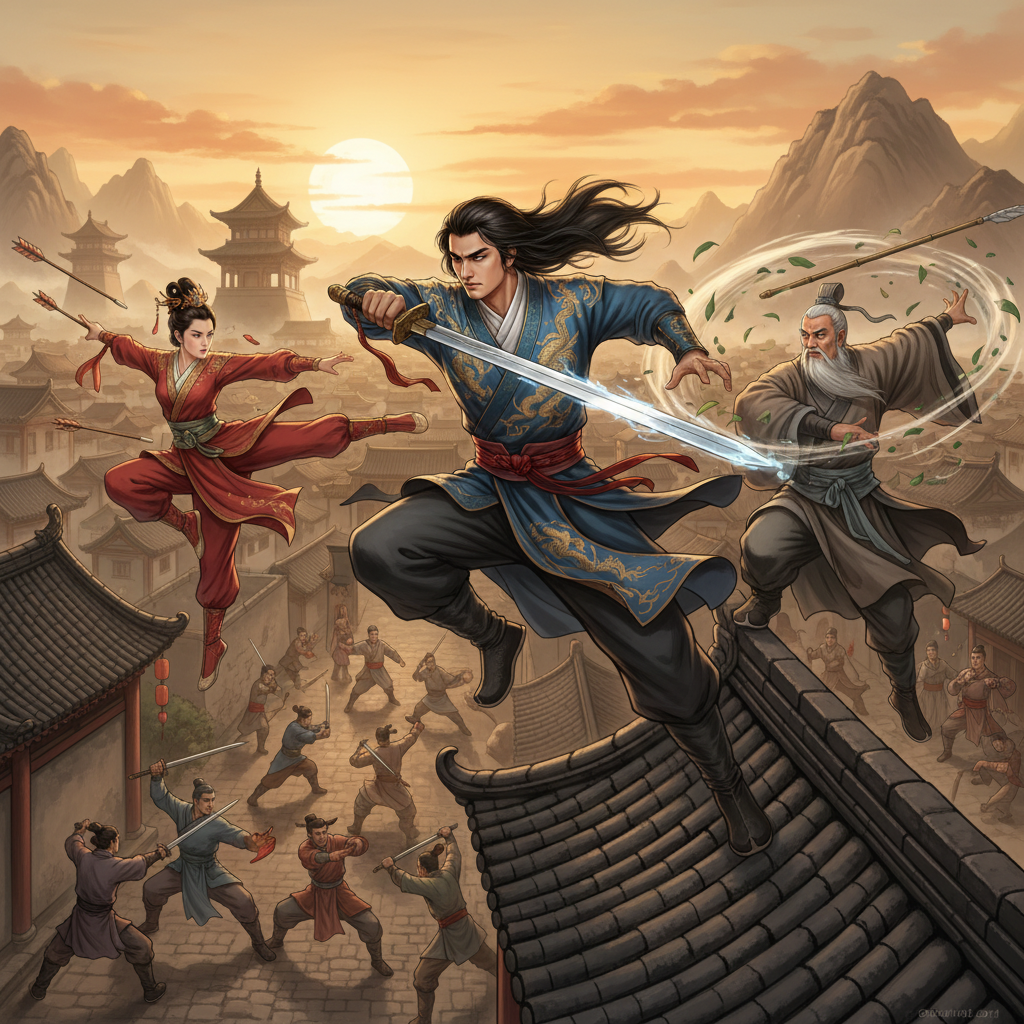
The Legacy of Jin Yong and His Wuxia Novels
Jin Yong, born Louis Cha, is often considered the father of modern wuxia literature, transforming the genre into a cultural phenomenon that captivates audiences in China and beyond. His novels, written between the 1950s and 1970s, combine historical context, philosophical themes, and intricate narratives, forging stories that intertwine personal ambition with broader social issues. This cultural significance has rendered his works seminal within Chinese literature and has influenced a plethora of media, from films to video games.
Historical Context of Wuxia Literature
Wuxia, meaning "martial heroes," is a genre that originates from ancient Chinese lore and folklore, presenting tales of warriors who possess superhuman martial arts skills. Jin Yong's works carved meaningful narratives against the backdrop of a China undergoing immense social and political transformation. Many of his stories are set in the historical past, often during the tumultuous times of the Song and Ming dynasties, providing readers with a window into a world defined by honor, loyalty, and conflict.
A pivotal period for Jin Yong’s writings was the post-World War II era, during which China was striving for national unity amid upheaval. His protagonists often embody ideals of righteousness, virtue, and sacrifice, resonating with a society yearning for heroes amid chaos. These themes remain prevalent, showcasing the lasting power and relevance of his work.
Iconic Characters and Their Development
One of the strongest elements of Jin Yong's novels is the depth and complexity of his characters. The protagonists—be they honorable warriors or conflicted antiheroes—navigating moral dilemmas and battling against oppressive forces, draw readers into their inner struggles.
For instance, the character Yang Guo from "The Return of the Condor Heroes" epitomizes the archetype of the 'lonely hero.' His journey reflects themes of love, loss, and acceptance, emphasizing personal growth even in a world fraught with danger. In contrast, Guo Jing from "The Legend of the Condor Heroes" represents the ideal of loyalty and integrity, embodying the Confucian values that resonate deeply with traditional Chinese culture.
Jin Yong skillfully captures the flawed humanity within his characters, encouraging readers to explore their motivations and the societal influences shaping their paths. This complexity allows for a richer understanding of not only the individual stories but also the broader human experience.
The Art of Martial Arts in Wuxia
Central to the allure of Jin Yong’s works is the detailed depiction of martial arts. His novels do not merely serve as action adventures; they delve into the philosophy and intricacies of martial arts, portraying it as an art form requiring discipline, skill, and mentor-mentee relationships.
Jin Yong's unique martial arts systems, such as "Nine Yin Manual" and "Eighteen Dragon-Subduing Palms," are marked by imaginative techniques that blend fantasy with realism, inviting readers to ponder the limits of human potential. The martial arts battles in his novels are meticulously crafted, not only showcasing physical prowess but also psychological strategies and principles of strategy.
Interestingly, Jin Yong often infused his martial arts with philosophical underpinnings, drawing from various schools of thought, including Daoism and Buddhism. This blend further deepens the narrative layers, allowing martial arts to serve as both a literal and metaphorical battleground for characters' conflicts and growth.
Storylines: A Mix of Adventure, Romance, and Philosophy
The intricate storylines woven by Jin Yong combine various elements, resulting in a rich tapestry of adventure, romance, and profound philosophical inquiry. His characters undergo quests that challenge their morals while navigating the tumultuous landscapes of loyalty, betrayal, and the quest for justice.
In "The Smiling, Proud Wanderer," the protagonist, Linghu Chong, explores personal freedom versus societal expectations. The narrative’s commentary on the dichotomy of power and morality speaks volumes about the human condition. Romantic entanglements, often fraught with difficulties, add another layer to the character arcs, presenting readers with the notion that love, much like martial arts, demands resilience and fortitude.
Jin Yong also incorporates historical figures and events, painting an engaging portrait of a time where the line between the real and the fantastical becomes blurred. This practice not only piques the reader's interest but also serves to enrich the cultural ethos of the narratives.
Cultural Significance and Impact on Contemporary Media
Jin Yong's contributions to wuxia literature extend beyond the pages of his novels; they have immensely influenced contemporary media, informing film, television, and more. His stories have been adapted into over a hundred television series and films, captivating diverse audiences while introducing them to the unique cultural heritage of Chinese literature.
The themes of honor, love, and socio-political struggles present in his narratives continue to resonate with modern storytellers, affirming the timeless nature of his work. His influence is a testament to the potential of literature to transcend cultural boundaries, offering insights into the values we uphold and the challenges we face.
In conclusion, Jin Yong's wuxia novels are much more than mere tales of martial prowess; they are richly detailed explorations of humanity, relationships, and the moral complexities of life. As readers delve into the worlds he crafted, they are invited to experience not only thrilling adventures but also deep reflections on their place within society.