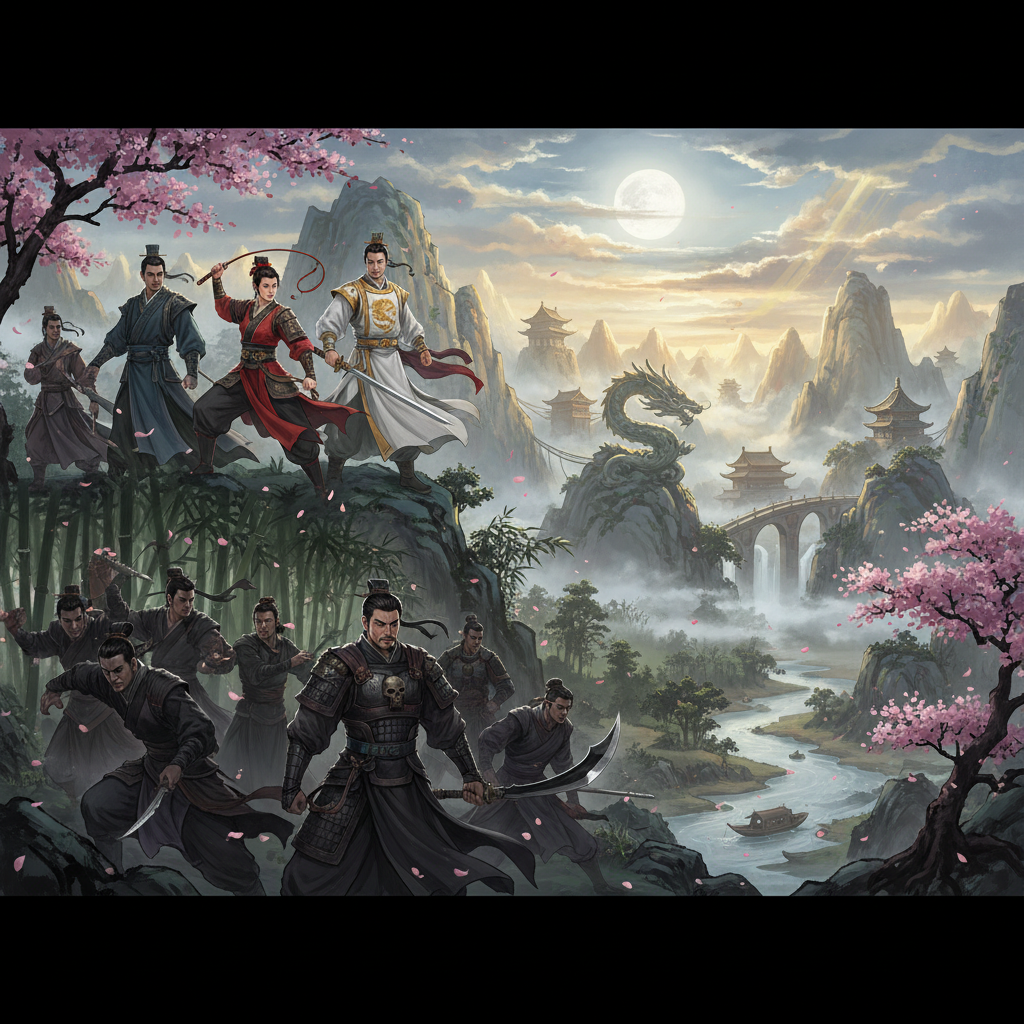
Understanding the Cultural Landscape of Wuxia Fiction
Wuxia, a genre that vividly marries artistry with martial prowess, has its heart rooted deeply in Chinese culture. During the late Qing Dynasty, this genre became an essential part of Chinese storytelling, offering a canvas for exploring notions of heroism, loyalty, and moral dilemmas against tumultuous historical backdrops. Jin Yong, one of the most celebrated authors of wuxia fiction, emerged in the 20th century, essentially redefining the concepts of heroism and villainy within this genre. His works have left a lasting impact on both literature and popular culture, making them a pivotal point of reference for understanding martial arts narratives.
Jin Yong's Complex Characters: Heroes and Antiheroes
Jin Yong’s novels are teeming with an eclectic mix of characters, ranging from the classic hero to more intricate antiheroes. Take for instance, Guo Jing from The Legend of the Condor Heroes. An embodiment of moral integrity, he is characterized by his loyalty and simplicity, traits that contrast sharply with figures like the cunning and calculating Ouyang Feng. This juxtaposition encapsulates the moral complexities inherent in human nature.
Moreover, characters such as Huang Rong challenge traditional gender norms, showcasing intelligence and resourcefulness that elevate them beyond mere side roles. Such complexities make Jin Yong’s characters resonate with readers on multiple levels, as they often embody both virtues and flaws, prompting profound introspection regarding humanity's moral fabric.
The Martial Arts: Philosophy and Technique
The martial arts depicted in Jin Yong's novels are not mere fighting techniques; they often symbolize deeper philosophical ideals. The grappling, swordplay, and techniques are infused with Confucian and Taoist philosophies, emphasizing balance, discipline, and the pursuit of inner peace. For instance, the “Nine Yin Manual” in The Legend of the Condor Heroes serves as not only a combat manual but also a spiritual guide, illustrating the harmony between martial prowess and personal growth.
Moreover, the intricate martial arts techniques often function as metaphors for character development. Characters frequently start as naive, unpolished fighters and evolve into masters who embody virtues such as wisdom, bravery, and selflessness. This evolutionary arc elevates the characters and provides readers with a sense of aspirational growth, signifying that martial arts is as much about the mind and spirit as it is about physical combat.
Storylines that Bridge Historical Context and Personal Journey
Jin Yong has a talent for intertwining vast historical landscapes with personal journeys of his characters. His narratives often explore turbulent times in Chinese history, such as the Mongol invasion or the struggles of various dynasties. Such historical contexts enrich the storylines, presenting a vivid backdrop against which his characters’ individual conflicts unfold.
In works like The Smiling, Proud Wanderer, the protagonist Linghu Chong epitomizes the theme of individuality versus conformity. The story not only critiques political corruption but also highlights the quest for personal freedom in the face of oppressive societal structures. This duality in Jin Yong’s narratives invites readers to reflect on their realities, considering how their personal struggles relate to broader societal challenges.
The Legacy and Cultural Significance of Jin Yong's Wuxia Novels
The cultural significance of Jin Yong's wuxia novels extends beyond storytelling; they have become an integral part of the cultural fabric not only in China but around the world. Adaptations of his works into films, television series, and video games testify to the universal appeal of his characters and themes. Furthermore, the dialogues and moral dilemmas encountered by his characters continue to be relevant, prompting discussions surrounding ethics, loyalty, and human relationships.
The enduring popularity of Jin Yong’s characters is evident in how they have shaped public perceptions of martial arts and heroism. They embody qualities that inspire, challenge, and ignite admiration, showcasing that the journey of self-discovery is one that transcends time and cultural boundaries.
Conclusion: The Timelessness of Jin Yong's Characters
Jin Yong’s characters encapsulate the essence of humanity through their struggles and triumphs, blending martial arts with rich moral and philosophical undercurrents. As readers dive into the world of these beloved figures, they find themselves not just engaged in thrilling adventures but also reflecting on their moral dilemmas and personal growth. This complex interweaving of character, martial arts, and storylines is what makes Jin Yong's work a celebrated legacy in the realm of literature and culture, ensuring that these narratives continue to inspire and resonate with generations to come.