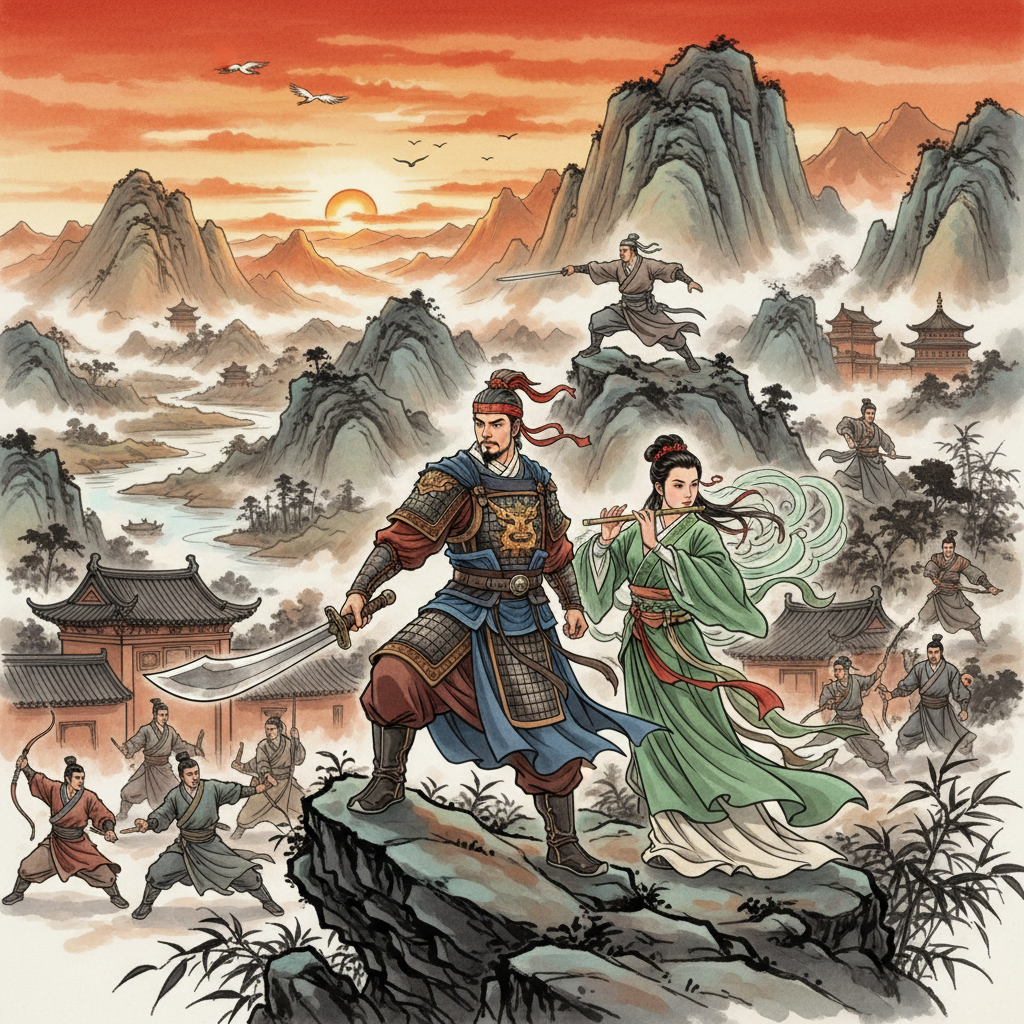
The Timeless Appeal of Jin Yong’s Wuxia Characters
Jin Yong, a pen name for Louis Cha, is a name synonymous with the genre of wuxia—an exciting literary form focusing on martial arts and chivalry in ancient China. Characterized by their complexity and moral ambiguity, Jin Yong's characters are not mere heroes but intricate individuals who navigate their paths through honor, betrayal, love, and vengeance. Their stories reflect not only adventure but also the philosophical underpinnings of Chinese culture.
Historical Context of Wuxia Novels
The wuxia genre emerged prominently during the early 20th century as a response to both foreign colonial forces and internal strife within China. It provided a framework through which readers could both escape and reflect upon their social realities. Jin Yong began publishing his works in the 1950s, transforming the landscape of martial arts literature. His novels depicted a rich tapestry of Chinese history, culture, and philosophy, set against the backdrop of heroic martial combat. This historical context gives depth to his characters, making them resonate with both domestic and international audiences.
Iconic Characters in Jin Yong’s Novels
What sets Jin Yong’s writings apart is his unforgettable cast of characters. From the gallant Guo Jing in "The Legend of the Condor Heroes" to the enigmatic Zhang Wuji in "Heaven Sword and Dragon Saber," each character brings a unique perspective to the shigaereas. Guo Jing represents the archetypal simple-minded hero whose innate goodness is countered by his lack of sophistication, while Zhang Wuji embodies the struggles of leadership and self-doubt.
Moreover, Jin Yong presents some of his female protagonists with equal nuance. Characters like Huang Rong and Xiaolongnü defy traditional gender roles, showcasing intelligence, strength, and emotional depth. Their stories often examine themes of love and sacrifice, adding layers to the overarching narrative and encouraging readers to reflect on personal ethics and emotions.
The Art of Martial Arts in Wuxia
Martial arts serve as the backbone of Jin Yong's novels, shaping character arcs and plot developments. His detailed descriptions of combat techniques, often rooted in historical martial disciplines, create a vivid picture of action and philosophy interwoven with the narrative. Techniques such as the "Eighteen Dragon-Subduing Palms" or the "Nine Yang Manual" serve not merely as physical skills but as symbols of power, discipline, and personal growth.
These martial arts elevate the conflict to epic proportions, showcasing a range of abilities and philosophies. Furthermore, the concept of "internal energy" or "qi" is pivotal in Jin Yong’s narratives, emphasizing the importance of cultivating one’s inner self alongside mastering physical skills. It signifies that true strength lies in harmonizing mind, body, and spirit.
Cultural Significance and Philosophical Depth
Jin Yong’s wuxia novels extend beyond mere adventure stories; they interrogate the nature of heroism versus villainy, loyalty versus treachery, and love versus power. These themes resonate deeply within Chinese cultural contexts, reflecting the complexities of historical and social realities. The moral dilemmas faced by characters encourage readers to ponder broader questions about ethics and existentialism.
Moreover, Jin Yong's works have been adapted into numerous films, television shows, and even video games, showcasing their significance in popular culture. The characters have become iconic symbols, embodying the ideals of Chinese chivalry known as "xia," reflecting virtues such as honor and righteousness.
Conclusion: Jin Yong’s Legacy
Jin Yong’s impact on both literature and popular culture cannot be understated. His characters, rich in depth and complexity, combined with a vivid portrayal of martial arts, create a compelling and immersive experience for readers. The enduring appeal of his work continues to inspire generations, not only within China but globally, as people delve into the mystical world of wuxia.
Through his narratives, Jin Yong invites readers to embark on a journey that transcends mere adventure and delves into the philosophical nuances of life, leaving a lasting legacy that continues to shape how stories of heroism and martial prowess are told.