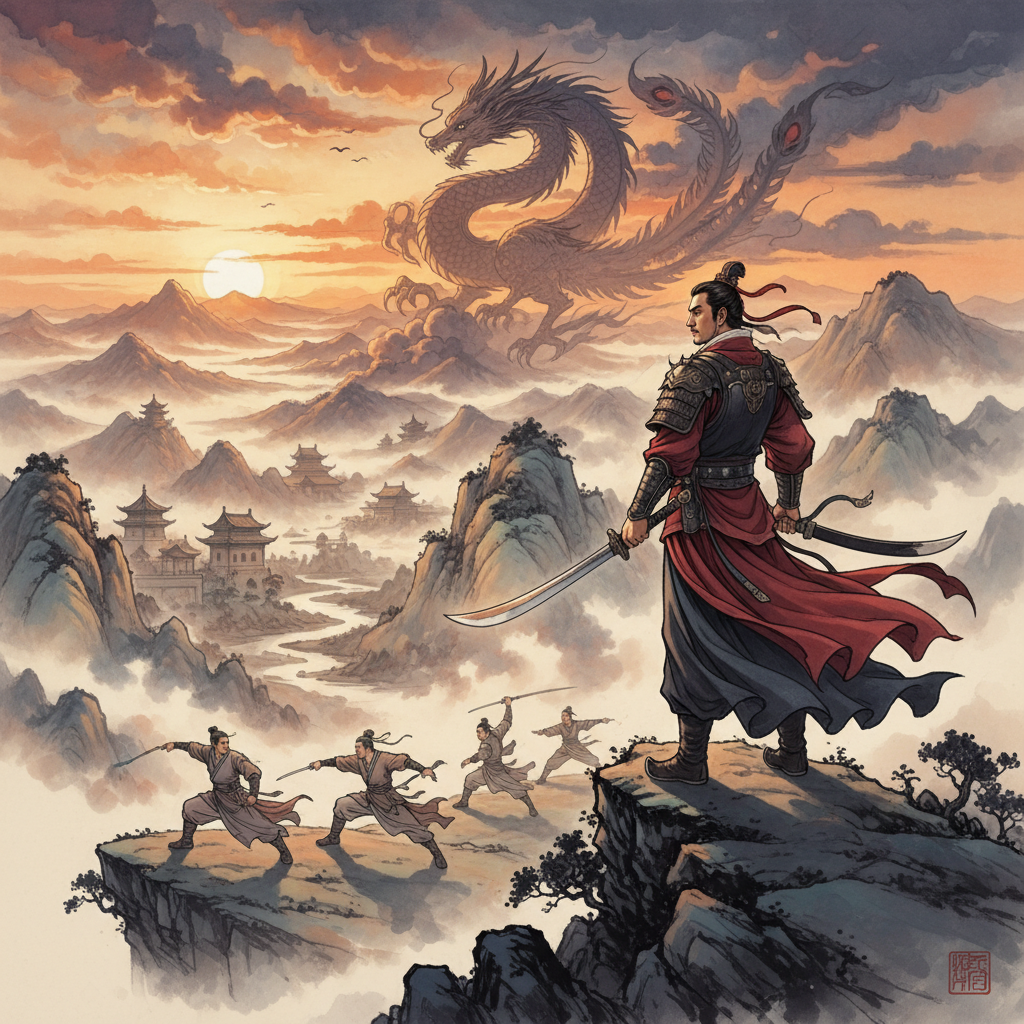
The Cultural Landscape of Wuxia Literature
Wuxia, a genre deeply rooted in Chinese cultural history, has captivated readers for centuries. Jin Yong, the pen name of Louis Cha, is perhaps the most iconic figure in this genre, with his novels blending historical fiction, martial arts, and philosophical musings. Wuxia stories often explore themes of justice, loyalty, and the moral dilemmas faced by their characters, reflecting the cultural values of Chinese society. Originating as early as the 19th century and flourishing throughout the 20th century, the genre saw a renaissance when Jin Yong began publishing his works in the 1950s, setting new standards for narrative complexity and character development.
Jin Yong: A Literary Giant
Born on March 6, 1924, in Haining, Zhejiang Province, Jin Yong's real name was Cha Lǐngzhōng. His journey into writing began while he was working as a journalist, where he initially penned short stories and serials. It wasn’t until the release of his first novel, "The Legend of the Condor Heroes," in 1957 that his significant impact on the genre became evident. Over the next few decades, he would go on to produce some of the most iconic texts in wuxia literature, including "The Smiling, Proud Wanderer," "Heaven Sword and Dragon Saber," and "Demi-Gods and Semi-Devils." His masterful storytelling established him as a foundational figure within Chinese literature, inspiring countless adaptations in film, television, and comics.
Iconic Characters and Their Complexity
One of the hallmarks of Jin Yong's novels is his complex and multi-dimensional characters. These protagonists and antagonists are often marked by their internal struggles, moral choices, and intricate relationships, allowing readers to connect deeply with them. For instance, the character of Guo Jing from "The Legend of the Condor Heroes" embodies unwavering loyalty and honor, while Yang Guo from "The Return of the Condor Heroes" showcases a more rebellious and nuanced persona, highlighting themes of love and sacrifice. Jin Yong's characters often exist in a morally gray area, challenging traditional notions of good and evil, thus enriching the narratives and providing depth.
Martial Arts: Philosophy in Motion
Martial arts, or "wushu," play an integral role in Jin Yong's novels, often serving as a metaphor for personal growth and philosophical exploration. The intricate combat techniques and styles, many rooted in real practices, enhance the dramatic action and symbolize the characters' inner journeys. Unique martial arts schools, such as the Beggar’s Sect and the Shaolin Temple, are not only settings for epic showdowns but also serve as platforms for discussing loyalty, tradition, and innovation. Techniques like "six meridian divine sword" or "nine yin manual," encapsulate a blend of creativity and the fantastical elements that define wuxia. Jin Yong’s depiction of martial arts transcends mere physicality, emphasizing the importance of mental discipline and ethical conduct in the pursuit of martial prowess.
Storylines: Weaving Historical Context with Fiction
Jin Yong's narratives are often steeped in historical events, reinterpreting real-life figures and moments in a fantastical light. Set during various dynastic periods, such as the Song, Ming, and Qing, his stories negotiate historical accuracy with fictional elements, serving both as entertainment and a reflection of socio-political issues. For example, the political machinations during the transition of dynasties provide a backdrop for personal conflicts, emphasizing themes of betrayal, resistance, and the quest for justice. The richness of the historical context not only draws readers into the narrative but also fosters a greater understanding of the complexities of Chinese history and culture.
The Legacy of Jin Yong’s Work
Jin Yong's impact on the literary world and beyond cannot be overstated. His works have spawned numerous adaptations, from television series to films, and his storytelling has inspired writers and creators across Asia and the globe. The cultural significance of his novels extends beyond their entertainment value; they serve as a vessel for exploring Chinese identity, the human experience, and the philosophical questions that govern our lives. Jin Yong passed away in 2018, but his legacy continues to thrive as new generations of readers discover the compelling world of wuxia. As a genre that marries fantasy with profound moral inquiry, Jin Yong's contributions to wuxia literature will undoubtedly endure for decades to come.
In a world where literature often transcends boundaries, Jin Yong's legacy stands as a testament to the universal themes of valor, sacrifice, and the quest for truth. Whether you are a long-time aficionado of wuxia or a newcomer to the genre, Jin Yong’s novels promise to take you on an unforgettable journey through the heart of Chinese storytelling.