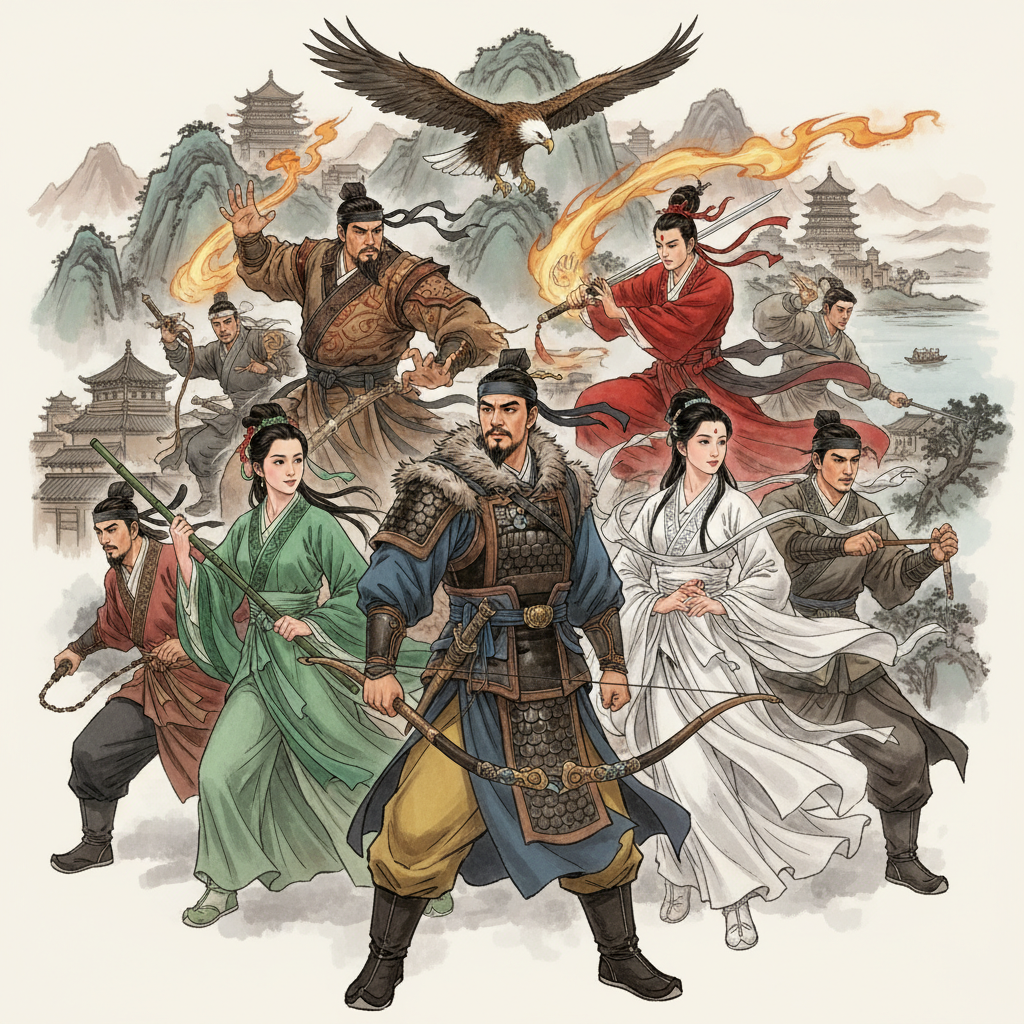
Introduction to Jin Yong and the Wuxia Tradition
Jin Yong (Louis Cha) stands as a towering figure in the world of Chinese literature, renowned for revolutionizing the wuxia genre—the martial arts fiction deeply rooted in Chinese cultural tradition. Born in 1924, Jin Yong’s prolific writing career spanned from 1955 until his death in 2018. His novels weave heroic tales set in ancient China, blending romance, intrigue, philosophy, and vivid depictions of martial arts prowess. These works are more than adventure stories; they encapsulate key elements of Chinese morality and national identity, resonating with readers across generations.
Rich Historical Context in Jin Yong’s Storytelling
Jin Yong’s novels are set against the backdrop of historical dynasties, particularly the Song, Ming, and Qing eras, bringing to life the socio-political turmoil of these times. By embedding his storylines within authentic historical frameworks, he adds layers of realism and gravitas to his fiction. For instance, The Legend of the Condor Heroes is set during the Southern Song dynasty and incorporates real historical figures and events, such as the Jin-Song Wars, enriching the narrative’s authenticity.
These settings not only generate a vivid sense of place but also allow exploration of themes like loyalty, patriotism, and cultural preservation under foreign threat—concepts deeply meaningful to Chinese readers, especially during the mid-20th century when China underwent immense upheaval.
Distinctive Characters: Heroes Shaped by Complexity and Morality
Jin Yong’s characters transcend typical archetypes, exhibiting profound internal conflicts that elevate them beyond mere martial prowess. His heroes, such as Guo Jing (The Legend of the Condor Heroes) and Zhang Wuji (The Heaven Sword and Dragon Saber), often grapple with the tension between personal desires and societal duties. These nuanced portrayals invite readers to reflect on virtues such as righteousness (义 yì), benevolence (仁 rén), and loyalty (忠 zhōng).
Moreover, his antagonists are rarely one-dimensional villains; many carry sympathetic motives or tragic fates, illustrating the blurred lines between good and evil. This moral ambiguity is a hallmark of Jin Yong’s narrative style, providing a more humanized, relatable portrayal of characters within the wuxia milieu.
The Art and Philosophy of Martial Arts in Jin Yong’s Novels
Martial arts in Jin Yong’s novels serve not only as thrilling action but also as a medium for illustrating philosophical ideals, particularly those derived from Taoism, Buddhism, and Confucianism. His detailed descriptions of martial techniques—ranging from internal energy cultivation (内功 nèigōng) to swordplay and qinggong (轻功, the art of lightness)—reflect an intimate knowledge of Chinese martial traditions.
Each martial arts school in his novels has a distinct style and ethos, contributing to rich world-building. For example, the Emei Sect emphasizes both martial skill and spiritual cultivation, often practiced by strong female protagonists, which challenges traditional gender norms. The emphasis on mastering oneself and balancing strength with virtue underscores a key message: true martial arts transcend physical combat and embody self-discipline and moral integrity.
Compelling Storylines Blending Romance, Adventure, and Philosophy
Jin Yong’s narratives masterfully interlace thrilling martial arts adventures with romantic subplots and philosophical musings. His stories often span multiple volumes, featuring intricate plots filled with betrayals, alliances, secret manuals, and legendary weapons. The use of cliffhangers, complex relationships, and suspense ensures that these novels captivate readers while exploring themes such as fate, honor, and the search for identity.
For instance, Demi-Gods and Semi-Devils presents three protagonists whose lives intertwine amid political chaos and personal tribulations, highlighting the diversity of human experience and the multifaceted nature of heroism. Jin Yong’s ability to balance high-stakes action with profound character development sets his works apart from traditional adventure stories.
Cultural Significance and Influence Across Media
Jin Yong’s wuxia novels have profoundly influenced Chinese popular culture, inspiring countless adaptations in television, cinema, comics, and video games. His works have become a shared cultural touchstone, shaping public imaginations about martial arts heroism and traditional Chinese virtues.
Academically, scholars analyze Jin Yong’s novels for their blending of folklore, history, and literary craftsmanship, recognizing their role in modernizing the wuxia genre and affirming cultural identity in a rapidly changing world. Outside Chinese-speaking communities, translations have introduced global audiences to wuxia’s rich narrative style, contributing to cross-cultural exchanges and expanding the genre’s reach internationally.
Conclusion: The Timeless Appeal of Jin Yong’s Wuxia Legacy
Jin Yong’s wuxia novels are timeless treasures that continue to captivate readers with their rich blend of historical authenticity, complex characters, intricate martial arts, and moral philosophy. More than simple tales of swordplay and adventure, they remain profound explorations of human nature and cultural heritage. As they inspire new generations of readers and creators worldwide, Jin Yong’s stories affirm the enduring power of storytelling in preserving and celebrating identity through the dynamic art of wuxia.