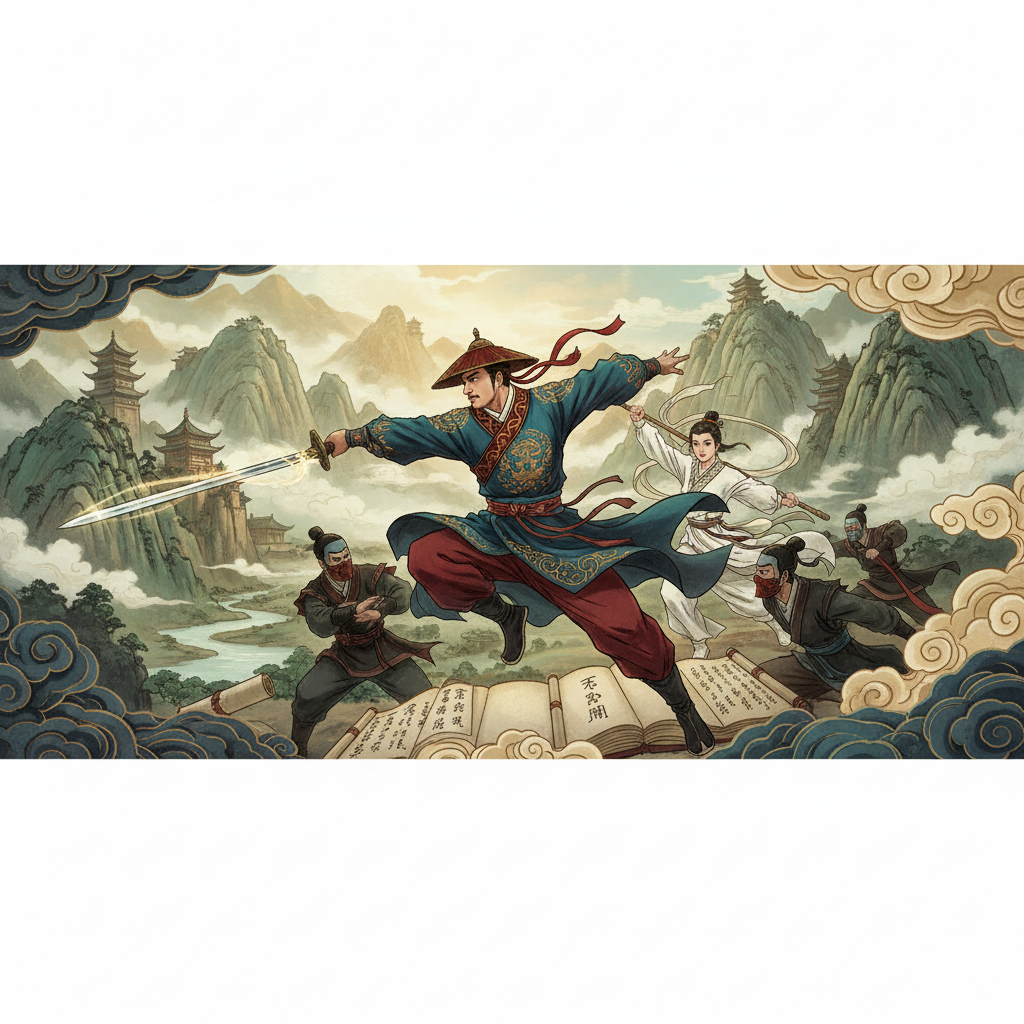
The Legacy of Jin Yong in Wuxia Literature
Wuxia novels, a fascinating genre of Chinese literature that combines martial arts with adventure, have captivated readers worldwide. At the forefront of this genre is the legendary author Jin Yong, whose works have not only defined the aesthetic of wuxia but also influenced modern storytelling. Born Louis Cha in 1924, Jin Yong's prolific writing career spanned several decades, during which he crafted intricate narratives showcasing heroism, loyalty, and the age-old struggle between good and evil.
Jin Yong’s novels are deeply embedded in Chinese culture, drawing upon historical contexts from various dynasties, especially the Ming and Qing. His characters often operate within a framework that reflects historical societal norms and philosophical ideals, such as Confucian values and the ethics of martial arts. This unique blend of history and fiction has enabled Jin Yong's works to transcend cultural barriers, making them relevant to audiences around the world.
The Characters: Heroes and Anti-Heroes
One of the defining features of Jin Yong's narratives is his richly developed characters. Protagonists such as Guo Jing from "The Legend of the Condor Heroes" and Wei Xiaobao from "The Deer and the Cauldron" embody virtues of bravery and cunning, respectively. Guo Jing's journey reflects a classic hero’s arc, where he rises from humble beginnings to become a paragon of virtue. In contrast, Wei Xiaobao is a more morally ambiguous character who navigates life with cleverness and audacity.
Furthermore, Jin Yong’s female characters, like Huang Rong and Zhao Min, break traditional molds, displaying intelligence, strength, and agency that resonate with contemporary readers. Huang Rong, known for her wit and resourcefulness, challenges typical gender roles prevalent in earlier literature, making her a beloved figure in Jin Yong's pantheon. The duality of moral standards in his characters invites readers to ponder the complexities of morality and the human experience.
Martial Arts: Techniques and Philosophy
Central to Jin Yong's novels are the rich depictions of martial arts, referred to as "gongfu" or "wushu." The detailed descriptions of combat techniques, training methods, and philosophies of martial arts engage readers and provide an immersive experience. Jin Yong artfully weaves martial arts into the fabric of his stories, using them as metaphors for personal growth and ethical dilemmas.
For instance, the "Nine Yin Manual" in "The Legend of the Condor Heroes" serves not just as a source of martial prowess but also encapsulates deeper philosophical themes such as balance and self-cultivation. The emphasis on inner strength and moral righteousness demonstrates that true mastery in martial arts extends beyond physical skill—it also involves the cultivation of character and virtue.
Storylines: Intricacies and Themes
Jin Yong's narratives are distinguished by their intricate plots filled with twists and turns, betrayal, loyalty, and the constant search for identity. The grand tapestry of interwoven storylines often features secret societies, rival clans, and historical references that invite readers to engage deeply with the text.
The interplay between personal conflict and broader societal challenges is a recurring theme. For example, in "The Heaven Sword and Dragon Saber," the quest for two legendary weapons mirrors the characters' internal struggles for power, morality, and legacy. The use of these elements allows Jin Yong to critique social structures while maintaining an engaging plot, demonstrating his skill as a storyteller.
Cultural Significance and Global Influence
Jin Yong’s contributions to wuxia literature have cemented his status as a cultural icon in both Eastern and Western contexts. His novels have been adapted into numerous television dramas, films, and video games, reinforcing their enduring appeal. The cultural significance of his work is also reflected in the broader discourse around Chinese identity and traditions, as readers often find solace in the values portrayed within his stories.
As more global audiences discover his work, Jin Yong’s uniqueness resonates with themes of adventure, honor, and the quest for meaning—universal concepts that transcend cultural boundaries. His influences can be seen in various genres worldwide, encouraging writers to explore the rich narratives of martial arts and honor codes similar to those in wuxia.
Conclusion: Jin Yong's Enduring Legacy
Jin Yong's wuxia novels continue to enchant generations with their intricate characters, compelling martial arts, and profound moral questions. His ability to blend historical context with timeless themes grants readers a profound understanding of not only the art of martial combat but also the human experience. As his works remain widely read and adapted, Jin Yong's legacy as the ‘grandmaster of wuxia’ solidifies, ensuring that his stories of honor, valor, and intrigue will never truly fade away.