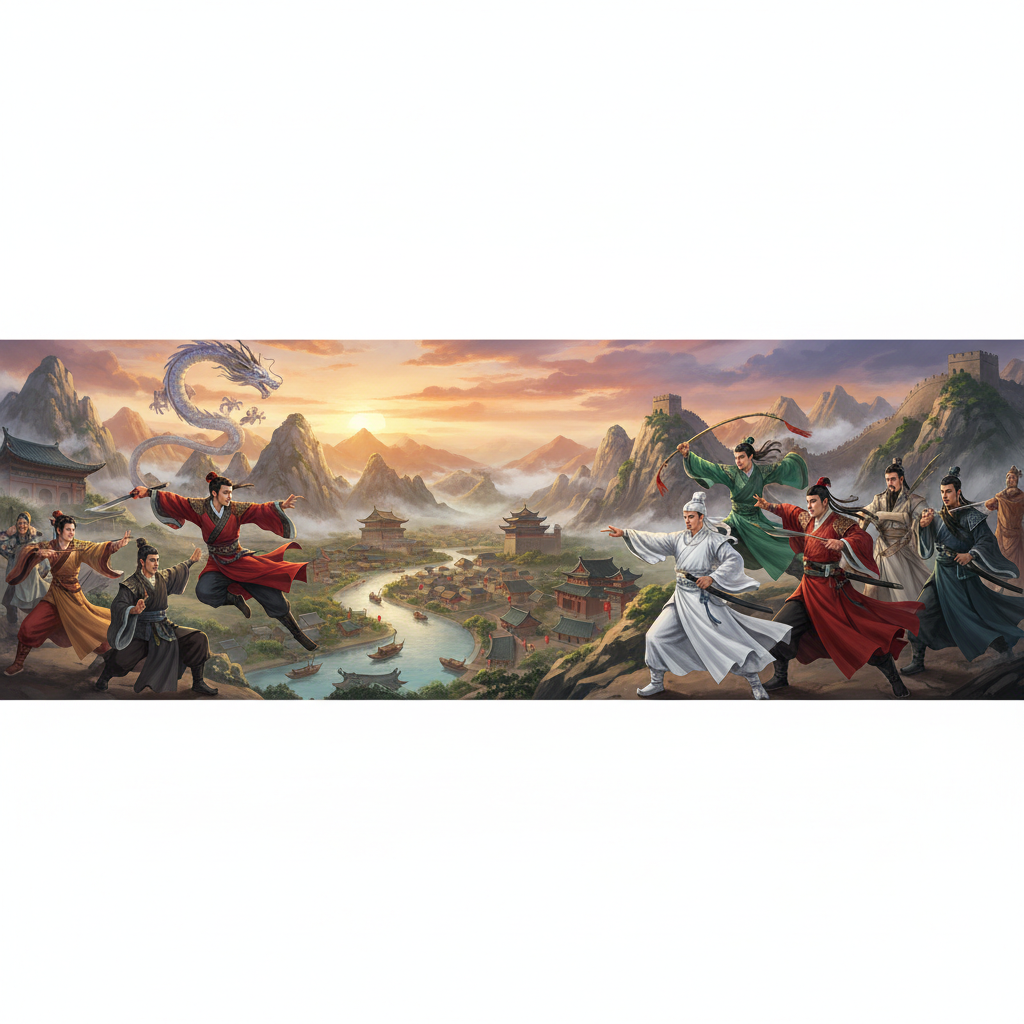
The Evolution of Wuxia in Chinese Literature
Jin Yong, born Louis Cha, is one of the most celebrated authors in the realm of wuxia (martial arts) fiction. Emerging in the 20th century, his novels stand as a cornerstone of modern Chinese literature. They not only entertain readers with thrilling adventures but also delve deep into Chinese philosophical thought, history, and cultural nuances. The genre of wuxia has its roots in earlier forms of Chinese storytelling, often featuring heroic figures in a mythical version of ancient China. By the time Jin Yong began publishing in the 1950s, wuxia had evolved considerably, merging traditional legends with contemporary issues, thus broadening its appeal.
Iconic Characters That Resonate
One of the key attractions of Jin Yong's novels is his rich tapestry of characters. From the honorable to the morally ambiguous, each character is imbued with depth and complexity. Take Guo Jing from "The Legend of the Condor Heroes"—a simple, honest man who rises to become a master of martial arts, representing the quintessential hero archetype in Chinese culture. In contrast, characters such as Yang Guo from "The Return of the Condor Heroes" present a more nuanced take on heroism, grappling with internal conflicts and the consequences of forbidden love.
Jin Yong’s characters often symbolize broader themes, such as loyalty, sacrifice, and the quest for identity in a rapidly changing world. These themes resonate with readers, allowing them to reflect on their own personal struggles against societal expectations and moral dilemmas.
The Intricacies of Martial Arts
Martial arts in Jin Yong's novels are not merely physical practices; they are expressed as an art form intertwined with philosophy and spirituality. Each character’s martial arts technique encapsulates their personality, vision, and emotional states. For instance, the "Nine Yin Manual" is a legendary text that imparts supreme martial arts skills but emphasizes self-discipline and a moral compass.
The fight sequences are meticulously crafted, blending choreographed martial movements with the characters' emotional battles. This attention to detail in martial arts not only enhances the narrative but also serves as a metaphor for life's struggles. Moreover, Jin Yong's descriptions often draw on traditional Chinese martial arts terminology, inviting readers into a deeper understanding of the cultural significance behind each move.
Storylines That Navigate Historical Themes
Jin Yong’s storytelling often weaves historical elements with fictional narratives, providing readers with a lens through which they can view significant periods in Chinese history. His novels frequently highlight the social upheaval of dynastic change, the conflict between various factions, and the rich tapestry of Chinese culture through the ages. For example, "The Deer and the Cauldron" sheds light on the Qing Dynasty's intricacies, exploring themes of political intrigue and revolution while still embedding elements of humor and charm.
This blend of historical and fictional storytelling allows readers to grasp complex social issues while enjoying gripping plots filled with battles, betrayals, and friendships. Jin Yong’s novels serve as both entertainment and a reflection of the moral and ethical values present in traditional Chinese culture.
Cultural Significance Beyond Literature
Jin Yong’s influence extends far beyond the realm of literature; his works have permeated various aspects of Chinese popular culture. From films and television series to video games and comics, his characters and stories have inspired countless adaptations, reinforcing their presence in the collective cultural consciousness. "The Legend of the Condor Heroes," for instance, has seen multiple adaptations in different formats, showcasing the universal appeal of its themes and characters.
Moreover, Jin Yong's novels offer a platform for discussions on identity, nationalism, and the complexities of modern Chinese society. As readers encounter his riches of cultural and historical references, they engage in a dialogue about their heritage, moral values, and the ever-evolving nature of their identity.
Conclusion: Jin Yong's Enduring Legacy
Jin Yong's wuxia novels represent a remarkable convergence of storytelling, martial arts, and philosophical exploration. His well-rounded characters, intricate martial arts depictions, and historically grounded narratives provide readers with an immersive experience that transcends mere entertainment. As both a literary figure and a cultural icon, Jin Yong has left an indelible mark on the world of fiction and beyond, fostering an appreciation for Chinese culture that resonates with audiences across the globe. His legacy continues as new generations discover and engage with the complexities and beauty of his intricate worlds.
In summary, Jin Yong’s novels are not just tales of gallant heroes and fierce battles; they embody a rich cultural narrative that invites us to reflect on our values, our history, and ultimately, ourselves.