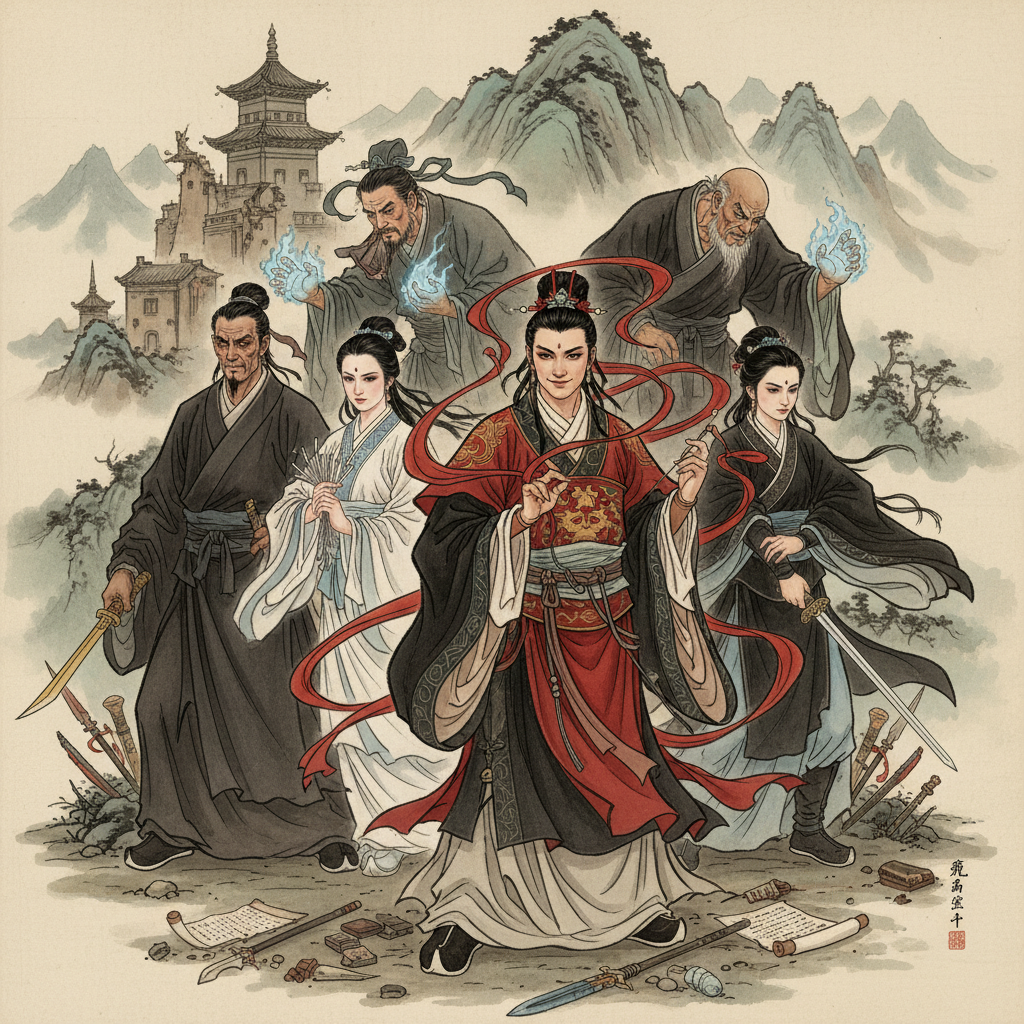
The Essence of Villains in Jin Yong's Wuxia Novels
Jin Yong, born Louis Cha, remains a towering figure in Chinese literature, particularly known for his contributions to the wuxia genre. His novels, rich with intricate storylines and formidable characters, often delve deep into the complexities of morality, honor, and ambition. While heroes like Guo Jing and Zhang Wuji capture much of the spotlight, it is the villains that add depth and texture to these sprawling narratives. In this article, we will explore the nature of these antagonists, their motivations, and their enduring legacy within the cultural fabric of Chinese society.
A Cultural Context: Villains in Wuxia
Wuxia, which translates to "martial heroes," emerged during China's historical tumult, where notions of honor, loyalty, and justice were constantly challenged. Villains in Jin Yong's works are often reflective of societal flaws, political corruption, or personal vendettas. They serve not merely as obstacles for heroes to overcome but also as manifestations of human frailty and moral ambiguity. Characters like the cunning and artful mastermind Ouyang Feng from "The Legend of the Condor Heroes" are steeped in cultural significance, showcasing the struggles between individual desires and collective responsibilities.
Complexity of Characters: Beyond Black and White
Jin Yong's villains transcend the archetypal 'evil' character. They are multifaceted, often driven by personal motives that resonate with the readers. Take the character of Dongfang Bubai from "The Smiling, Proud Wanderer"; he defies traditional norms with his compelling backstory: a tragic hero turned villain longing for power and validation. His journey forces readers to reconsider the dichotomy of good and evil, creating a rich tapestry of conflict and intrigue. This nuanced portrayal invites readers to empathize with villains, revealing that their drives—whether for power, revenge, or redemption—often reflect universal human experiences.
Martial Arts as a Reflection of Character
A hallmark of Jin Yong's storytelling is the intricate martial arts techniques employed by both heroes and villains. The fighting styles often symbolize the characters’ morals, emotions, and philosophies. For example, the nefarious techniques of Ouyang Feng signify deceit and manipulation, contrasting sharply with the honorable techniques of the righteous protagonists. This duality not only illustrates the characters’ personalities but also serves as a metaphor for the struggle between good and evil that permeates the wuxia narrative. Moreover, the martial arts illustrate the psychological dimensions of these villains; their methodologies often point to their vulnerabilities, insecurities, and the lengths they will go to achieve their goals.
Notable Villains and Their Impact
Some of Jin Yong's villains have become iconic, not only within his narratives but also in wider Chinese popular culture. Characters like the ruthless and ambitious, yet deeply human, Xiao Feng challenge readers’ perceptions of loyalty and betrayal. The intensity of their actions, steeped in complex motivations, invites discussions about the moral implications of their choices. These characters also reflect broader themes pertinent to Chinese society, such as the struggle between tradition and modernity, showcasing a conflict that resonates with contemporary readers.
The Legacy of Jin Yong's Villains
The villains in Jin Yong's works are endlessly fascinating due to their complexity and the socio-political contexts in which they operate. Their longevity within popular culture is indicative of the archetypes they represent, allowing for perpetual exploration in adaptations across film, television, and literature. The rich characterization and depth of these antagonists have led to their prominence beyond the confines of their respective stories, inspiring numerous adaptations and reinterpretations.
As we delve into the multi-layered worlds constructed by Jin Yong, it becomes clear that the villains he crafted are more than mere plot devices. They serve as mirrors reflecting the intricacies of human nature and societal challenges. Through their journeys, readers are invited to confront their own moral compass, making Jin Yong's villains crucial to understanding the broader human experience portrayed in wuxia literature.
Conclusion
In closing, the villains of Jin Yong's wuxia novels are not simply adversaries but essential elements that enhance the narrative's complexity. Their motivations, struggles, and unique martial arts techniques embody the rich interplay of morality, ambition, and the human condition. As we continue to engage with these timeless stories, the villains will remain a significant aspect, reminding us of the fine line between heroism and villainy.